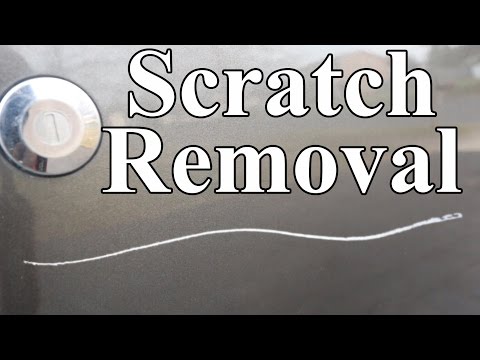
Short version: Fixing a car scratch comes down to one question before you touch it: how deep does it go? Car paint is built in layers, clear coat on top, then color, then primer, then bare metal. A shallow scratch that only marks the clear coat can be buffed out at home with a polish and a microfiber. Anything deeper, once the scratch cuts into the color or the primer, needs paint put back, not polish, and that is real body and paint work. The fastest honest test is your fingernail: if it glides over the scratch it is probably clear coat and DIY-fixable, and if it catches in the scratch it has gone deeper and DIY tricks will only smear it. After 20+ years doing mobile auto body and paint work across Alexandria, Arlington, Fairfax, Falls Church, and McLean, here is how to tell what you are dealing with, what you can safely fix yourself, and when to stop before you make it worse.
How do you fix a car scratch?
You fix a car scratch by matching the repair to the depth. Clear coat scratches get polished out. Scratches into the color or primer get cleaned, filled with matching paint, leveled, and blended. Scratches to bare metal also need primer first to stop rust.
The mistake almost everyone makes is reaching for the same fix no matter how deep the scratch is. A scratch-remover polish works beautifully on a light clear coat scuff and does absolutely nothing on a key line that cut down to the color, because there is no clear coat left to level in that groove. So the first move is never "which product do I buy." It is "how deep did this go." Get that right and the fix is obvious. Get it wrong and you either waste an afternoon or make the damage more noticeable.
First, figure out how deep the scratch is (the fingernail test)
Drag your fingernail lightly across the scratch. If your nail glides over it, the scratch is in the clear coat only and you can likely fix it yourself. If your nail catches, the scratch is into the color coat or deeper and it needs paint.
Car paint is four layers, and knowing which one the scratch reached tells you the whole repair. From the top down:
- Clear coat (top layer). The glossy protective layer with no color in it. A scratch here looks like a dull or white line that often fades when you wet it. Your fingernail slides right over. This is the only kind of scratch a DIY polish reliably removes.
- Color coat (base coat). The actual paint color. A scratch into this shows your car's color line has been cut, and on a metallic you will see the flake broken up. Your fingernail catches lightly. No polish fixes this. It needs color put back.
- Primer (usually gray or white). If you see a gray, white, or dull line under the color, the scratch is into primer. Your fingernail catches firmly. This needs primer, color, and clear, layered back in order.
- Bare metal (or bright silver). A bright, shiny scratch means it went all the way to the metal, or plastic on a bumper. On metal this will start rusting, so it is the one scratch you should not sit on. It needs primer first, then paint.
The wet test backs up the fingernail: spray water or spit on the scratch. If it vanishes while wet and comes back as it dries, it is clear coat and buffable. If it is still clearly visible while wet, it is deeper. Two ten-second tests tell you more than any product label.
Clear coat scratches: the only ones you can safely fix yourself
A clear coat scratch is DIY-friendly because there is no color to match. You are just leveling the top of the clear coat down to the bottom of the scratch with a mild abrasive, then sealing it. Wash, prep, polish, wipe, wax.
This is the fix behind every "remove scratches with this one product" video, and on a real clear coat scratch it genuinely works. Clean the area properly first, alcohol or a prep wipe to kill wax and grease, then work a scratch-removing polish or a light rubbing compound into the mark with a microfiber or foam pad, firm pressure, 30 to 60 seconds of short passes. Wipe the haze off and check under bright light. If the line is gone, wax it to protect the clear coat you just thinned. The video below walks through this exact process on a clear coat scratch, and it is a solid method as long as your scratch actually is clear coat only.
One caution: you are removing clear coat, which is thin to begin with. On a light scratch that takes a minute of hand polishing you are fine. If you find yourself leaning on a power buffer for ten minutes, you are burning through the clear coat and about to expose color, which turns a small problem into a repaint. If a minute of hand work does not clear it, it was never a clear coat scratch. Stop.
Color coat and deeper: why these need paint, not polish
Once a scratch cuts into the color coat, primer, or metal, there is nothing to polish away. The only real fix is to clean the groove, lay matching paint back into it, level it flush, and blend the clear coat over the top. That is paint work.
Here is the part the DIY listicles skip. Filling a color-coat scratch is not "dab paint in the line." Done right it means degreasing the scratch, feathering the edges so the new paint has something to grab, laying color in thin coats and letting each flash off, building it slightly proud of the surface, then wet-sanding it dead flat and polishing so the repair edge disappears. On a solid color like white or black, a careful hand can get close. On a metallic or pearl, the flake has to lie the same direction and density as the factory paint or the patch flashes a different shade in sunlight, and that is why a real metallic scratch usually needs the paint sprayed and blended into the surrounding area, not brushed. This is exactly the work that separates a scratch that disappears from a patch you notice every time you walk up to the car. For what that work runs in this area, see our car scratch repair cost breakdown, and for the closely related chip and scuff jobs, paint chip repair and bumper scuff repair.
What about toothpaste, scratch removers, and the other DIY tricks?
Toothpaste is a real but very weak abrasive, so it can slightly soften a shallow clear coat scuff and does nothing on a deeper scratch. Dedicated scratch-remover polishes work better on clear coat marks. None of them put color back, so none of them fix a scratch you can feel with a fingernail.
Let me be straight about the popular tricks, because I get asked about all of them:
- Toothpaste. It is a mild abrasive, so on a hairline clear coat scuff it can help a little. On anything your nail catches, it does nothing but make you feel like you tried. It is a weaker version of a proper scratch polish, not a secret hack.
- Scratch-remover creams (the tube kind). These are legitimate for clear coat scratches. They are a fine abrasive polish. They still cannot fix a color-coat or primer scratch, because there is no color in the tube.
- Touch-up pens and bottles. Useful for stopping rust on a deep chip or scratch and for small dead-on-color spots. On a long scratch they leave a raised, off-texture line that often looks worse than the scratch unless it is leveled and blended afterward. More on that next.
- Rubbing a coin, a candle, or WD-40 on it. These hide a scratch for a few days by filling it with wax or oil. The scratch is still there and comes right back after a wash. Fine for a photo, not a fix.
The honest rule: DIY products fix clear coat scratches and buy time on deeper ones. They do not put paint back. If your fingernail catches, no bottle on the shelf makes that scratch disappear.
When a touch-up pen actually works (and when it makes it worse)
A touch-up pen works on small, deep, dead-on-color spots like a rock chip or a short deep scratch, mainly to seal bare metal against rust. It works poorly on long or wide scratches, where the raised, mismatched line it leaves is more visible than the scratch was.
Touch-up paint has two real jobs. First, protection: on a scratch or chip down to metal, getting matched paint into it stops rust from starting, and that matters more than looks. Second, small cosmetic spots you view from a few feet away. Where people go wrong is running a pen down a twelve-inch key line and expecting it to vanish. It will not, because the paint sits proud of the surface, catches light differently, and the color rarely matches perfectly out of the bottle, especially on metallic. If you do use a pen on a deep scratch to stop rust before you can get it fixed properly, apply it thin, keep it inside the scratch line, and know a pro will likely level and blend over it later. For how insurance fits into a bigger scratch or a keyed-panel claim, see insurance and repair, what you need to know.
When to call a mobile pro instead of DIY-ing it
Call a pro when your fingernail catches in the scratch, when it is long or on a body line, when the paint is metallic or pearl, or when it went to bare metal. Those are paint-and-blend jobs where a DIY attempt usually makes the repair more visible, not less.
Here is the boundary I give every DMV customer before they spend a Saturday on it:
- Do it yourself: a light clear coat scratch or scuff, solid or non-metallic color, where your fingernail glides and the wet test makes it disappear. A polish and a microfiber, twenty minutes, done.
- Call a pro: any scratch your fingernail catches in, any scratch longer than a few inches, anything on a metallic or pearl finish, a keyed panel, a scratch across a body line or edge, or any scratch down to bright metal that will rust. These need color laid back in and blended, and that is where a bottle-and-a-prayer job goes sideways.
The reason to stop rather than push on is simple. A scratch is a thin, cheap-to-fix problem. A botched DIY paint job over that scratch, sanded through the clear coat or patched with mismatched color, turns it into a full panel respray. I would much rather fix the original scratch than un-do a DIY repair on top of it. Scratches are also cosmetic, so unlike a dent there is rarely a rush, which means there is time to do it right. If your damage is actually a dent with the paint still intact, that is a different fix entirely, see how to get a dent out of a car and what dents PDR can fix.
How I fix a car scratch in your DMV driveway
Because scratch and paint touch-up work needs no shop, I fix most scratches right where your car is parked. You send me a few photos, I tell you honestly whether it is a polish job or a paint job and what it runs, then I come to your home or office and do it on the spot.
A typical job goes like this. Text me three photos: one straight-on close-up of the scratch, one at an angle so I can read the depth in the light, and one wide shot of the panel so I can see the color and where it sits. Tell me one detail, the year and model, so I can pull the exact factory paint code. From that I can usually tell you whether it is a clear coat scratch I will polish out in twenty minutes or a color-coat scratch I need to fill, level, and blend, and I give you the price before I drive out. Most single scratches are done in one visit in Alexandria, Arlington, Fairfax, Falls Church, or McLean, and because it is paintless-shop-free mobile work, your car never leaves your driveway. For the full pricing picture on scratch work, see car scratch repair cost, and for how mobile compares to a body shop in general, mobile vs shop repair.
Frequently asked questions about fixing car scratches
Can you fix a car scratch yourself?
Yes, if it is a clear coat scratch. If your fingernail glides over it and it disappears when wet, a scratch-remover polish and a microfiber will fix it in about twenty minutes. If your fingernail catches, it is deeper than clear coat and needs paint, not polish.
Does toothpaste really fix car scratches?
Only barely. Toothpaste is a weak abrasive, so it can soften a very shallow clear coat scuff. It puts no color back, so it does nothing on any scratch you can feel with a fingernail. A dedicated scratch polish works better for the same job.
How do I know if a scratch is deep or just surface?
Run a fingernail across it. If your nail glides over, it is surface clear coat. If it catches, it is deep. A wet test confirms it: a surface scratch vanishes while wet and returns as it dries, a deep one stays visible when wet.
Will a touch-up pen make my scratch invisible?
No. A touch-up pen is for sealing deep chips and small spots against rust, not for making a scratch disappear. On a long scratch it leaves a raised, slightly off-color line that is often more noticeable than the scratch. Deeper scratches need paint filled, leveled, and blended.
How much does it cost to fix a car scratch?
A light clear coat scratch you buff yourself costs the price of a polish. A professional scratch repair depends on depth, length, and whether the paint is metallic. See our car scratch repair cost breakdown for real DMV pricing by scratch type.
Can a deep scratch be fixed without repainting the whole panel?
Usually, yes. A good tech fills and blends the scratch into the surrounding area rather than respraying the entire panel. On solid colors this is straightforward. On metallic or pearl, the blend has to reach far enough that the flake matches, which is why metallic scratches take more skill.
Should I fix a scratch that went down to bare metal right away?
Yes. A scratch to bare metal will start to rust, and rust spreads under the paint around it. At minimum get matched touch-up paint into it to seal the metal, then have it repaired properly. This is the one scratch you should not leave for later.
The bottom line
Fixing a car scratch is easy once you stop guessing at products and start with depth. Fingernail glides, it is clear coat, and a polish and a microfiber will handle it at home. Fingernail catches, it is into the color or the metal, and it needs paint filled and blended, which is real body and paint work best left to someone who does it every day. Toothpaste and touch-up pens have their place, but neither one puts paint back. If you have a scratch in the DMV and you are not sure which kind it is, send me three photos and I will tell you honestly whether it is a twenty-minute polish or a paint job before I ever drive out.
Buster has been doing mobile paintless dent repair across the DMV for 20+ years. He pulls dents from the inside of the panel, no body shop, no repaint, factory finish stays. Most jobs done at your driveway in 1 to 2 hours.