Short version: You fix a dent in a plastic bumper with heat, not with a paintless dent repair rod. Plastic bumper covers are a soft thermoplastic that goes flexible when you warm it, so the fix is to heat the dent to around 160 to 200 degrees, reach behind the panel, and push it back to its factory shape while it is warm, then cool it to set. That works when the dent is a smooth push-in with the paint intact and you can reach behind it. It does not work when the paint has cracked, the plastic is split, or a mounting tab behind the bumper snapped. Skip the plunger, dry-ice, and hot-water party tricks you see online. After 20-plus years fixing bumpers across Alexandria, Arlington, Fairfax, Falls Church, and McLean, here is the honest guide to what actually works, what to leave alone, and what it costs.
How do you fix a dent in a plastic bumper?
You heat the plastic until it is flexible, push the dent out from behind the panel, and cool it to set the shape. This works on smooth dents with intact paint. Cracked paint or split plastic needs a pro.
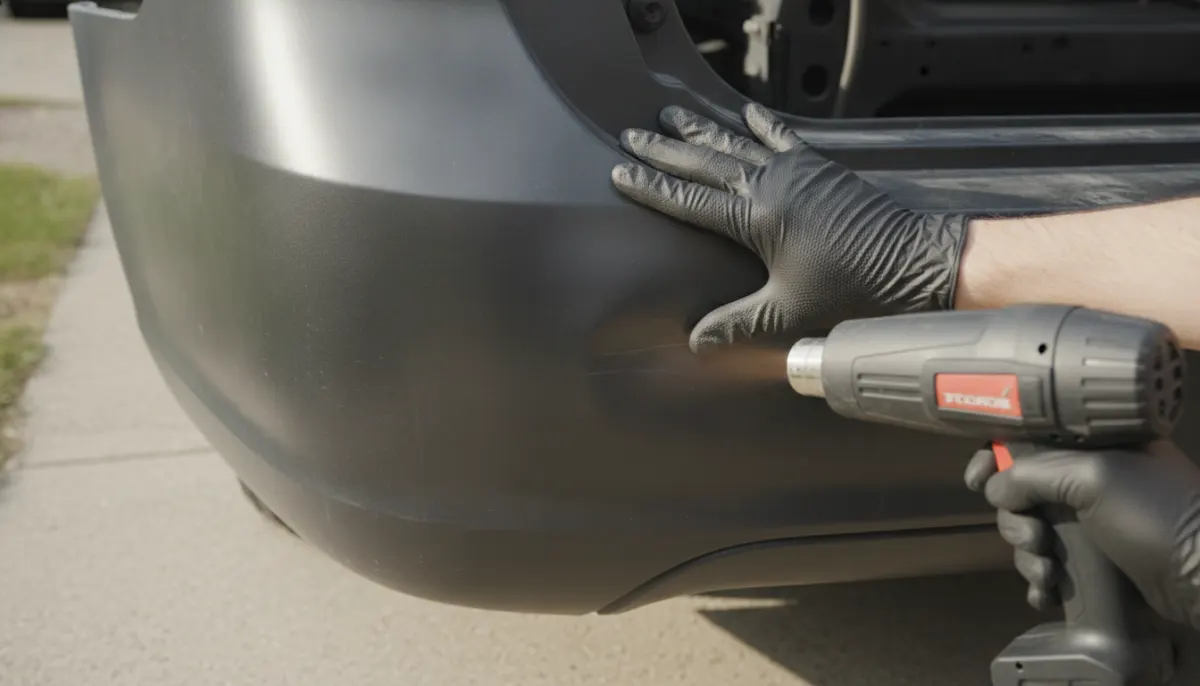
A plastic bumper is not metal, and that changes everything about the repair. Most bumpers on modern cars are a painted plastic cover, usually a thermoplastic that softens with heat and holds a shape when it cools. So the whole game is temperature. Warm the dented area evenly with a heat gun until the plastic goes soft and pliable, get your hand or a rounded tool behind the low spot, and press it back toward where it started. As long as the paint never cracked, the plastic remembers its molded shape and the dent flexes back out. Then you cool it with a damp cloth so it locks in. That is the entire method, and it is genuinely different from how a metal panel gets fixed.
Why plastic bumpers fix differently than metal panels
Metal panels are worked with paintless dent repair rods that use the metal's memory. Plastic bumpers have no metal memory, so they are heated soft and pushed, not rodded.
When I fix a dent in a steel door or an aluminum fender, I am relying on the metal wanting to return to its original shape, and I work it back a fraction at a time from behind with a rod. That is how dents come out of a metal panel, and it is the classic paintless dent repair you have probably heard of. A plastic bumper cover does not behave that way at all. Cold plastic is stiff and brittle and will crack if you force it, which is why the plunger and pull-tab tricks fail on a real bumper. Warm plastic is soft and cooperative. So the tool that matters most on a bumper is not a rod, it is controlled heat. This is also why you cannot judge a bumper dent by what you know about metal dents. For the bigger picture on which dents any method can and cannot fix, see what dents PDR can fix.
The heat-and-push method that actually works
Heat the dent to about 160 to 200 degrees until the plastic is flexible, push it out from behind while warm, then cool it with a damp cloth. Keep the heat moving so you never scorch the paint.
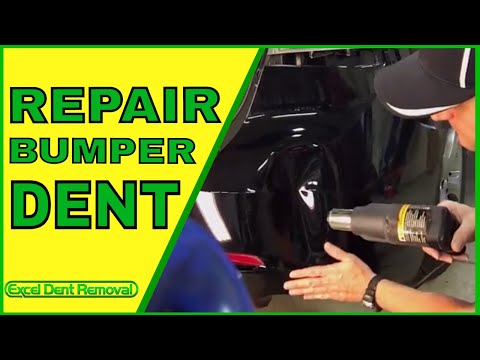
Here is the honest walkthrough. First, get behind the dent. On most bumpers that means turning the wheel and peeling back the fender liner by popping a few plastic clips, or partly unbolting the bumper cover so you can reach the inside of the panel. Second, warm the dented area with a heat gun on a medium setting, always moving, until the plastic is hot to the touch and flexes under light pressure. Do not park the heat gun on one spot. Too much heat in one place burns the paint or bubbles the clearcoat, and now you have a paint problem on top of a dent. Third, with a gloved hand or a rounded tool behind the panel, press the low spot back toward flat, starting at the body lines that are holding the dent in. Keep re-warming as it cools. Fourth, when it is back to shape, wipe it with a cool damp cloth to set the plastic. Check your work in good light from several angles for high spots before you call it done. The video below shows a working tech running exactly this heat-and-push process on a plastic bumper.
Which bumper dents you can DIY, and which you can't
You can DIY a smooth, shallow, paint-intact dent you can reach behind. You cannot DIY cracked paint, split plastic, broken mounting tabs, or a dent on a sharp body line. Those need a pro.
Most people get into trouble by trying the heat method on a dent that was never going to respond to it. Here is the honest split.
| Bumper damage | DIY heat-and-push? | Why |
|---|---|---|
| Smooth pushed-in dent, paint intact, reachable from behind | Yes, realistically | Warm plastic flexes back to its molded shape with no paint work needed |
| Dent with cracked or chipped paint | No | Heat cannot un-crack paint. Pushing spreads the crack. Needs sanding and repaint |
| Split or torn plastic | No | The cover has to be plastic-welded or replaced, not pushed |
| Broken mounting tab or clip behind the bumper | No | The dent is being held by a snapped bracket, not the plastic itself |
| Dent on a sharp body line or crease | Usually no | Body lines rarely reflow cleanly with heat and leave a visible waviness |
| Deep scuff or scrape, no real dent | Different repair | That is a paint and scuff job, covered in bumper scuff repair cost |
If your dent is in the top row, the heat method is worth a careful try. If it is anywhere below that, heating and pushing will usually make it worse, not better.
The DIY tricks that mostly don't work on a bumper
The plunger, dry-ice, hair-dryer, and boiling-water tricks rarely fix a real bumper dent. A plunger cannot grip a curved bumper, a hair dryer barely warms plastic, and boiling water is messy and inconsistent.
Search this topic and you get a pile of viral tricks. Most of them do not survive contact with an actual bumper. A toilet plunger needs a flat, smooth, sealed surface to grip, and a contoured bumper with a dent in it gives it nothing to hold. A hair dryer usually cannot get plastic hot enough to move, so you push and push on stiff plastic and it either does not budge or it cracks. Boiling water can work in a pinch because it is genuinely hot, but pouring water on a car in a driveway is messy, hard to control, and easy to overdo. The dry-ice-after-heat trick is real physics, but on a bumper the results are hit or miss and you can frost or crack the plastic if you rush it. The one method that reliably works is even heat from a heat gun plus a push from behind, done patiently. Everything else is a gamble on your paint. If you want the full rundown of DIY versus professional across all dent types, I laid it out in PDR vs body shop.
When a plastic bumper dent needs a pro or a body shop
Call a pro when the paint cracked, the plastic split, a tab broke, the dent sits on a body line, or you cannot safely reach behind it. A tech fixes those without repainting far more often than a shop will.
There is a real difference between what a mobile tech does and what a body shop does with a dented bumper. A lot of shops default to sanding the whole cover, filling, and repainting it, or just replacing the bumper cover outright. That works, but you lose your factory paint and pay for a full refinish and a color blend that may never match perfectly. When the dent qualifies, I can heat-and-push it back and your original paint stays on the car. Where I draw the honest line is the same as the table above: cracked paint, split plastic, a snapped mounting bracket, or a sharp crease that will not reflow cleanly. Those genuinely need paint work, plastic welding, or a new cover, and I will tell you that up front instead of heating a dent that was never going to move. For the cost side of a full bumper repair, see plastic bumper repair cost, and if the bumper took a hit in a low-speed collision, fender bender repair cost covers that scenario.
What plastic bumper dent repair costs in the DMV
A pro heat-and-push on a qualifying bumper dent typically runs about $100 to $250 in the DMV. A body-shop repaint of a bumper cover runs several hundred to over a thousand, and a full cover replacement costs more.
The price gap is the whole reason to fix the dent the right way. A DIY attempt costs you the price of a heat gun and your afternoon, plus the risk of turning a dent into a paint job if you scorch it. A mobile pro push, when the dent qualifies, is usually in the low hundreds because there is no paint, no filler, and no shop time involved. A body shop that sands, fills, and repaints the cover is doing far more labor and putting new paint on the car, which is why the same dent can jump to several hundred or more, and replacing the whole bumper cover is higher still once you add the part, the paint, and the install. The honest move is to find out first whether your dent is a push or a paint job, because that single answer is what decides your bill. I break the numbers down further in plastic bumper repair cost and, for dents in general, types of car dents.
Why I fix bumper dents in your driveway
Because a qualifying bumper dent needs heat and a push, not a paint booth, I can fix it at your home or office instead of you leaving the car at a shop for days.
A heat gun, a set of hands, and the right read on the dent are the whole toolkit for this repair, and none of it requires a body shop. That is why I run it mobile across the DMV. You send me a couple of photos of the dent, I tell you honestly whether it is a push or a paint job before I ever drive out, and if it qualifies I fix it in your driveway in Alexandria, Arlington, Fairfax, Falls Church, or McLean, usually in about an hour, with your factory paint untouched. No tow, no rental, no week at the shop for a dent that takes one visit.
Frequently asked questions about plastic bumper dents
Can you fix a dent in a plastic bumper without repainting?
Yes, if the paint is intact and the plastic is not cracked or split. Heating the bumper until it is flexible and pushing the dent out from behind keeps your factory paint. Only cracked paint or torn plastic forces a repaint.
Will a hair dryer get a dent out of a bumper?
Usually not. A hair dryer struggles to get plastic hot enough to move, so you end up pushing on stiff plastic that will not flex and may crack. A heat gun on a medium setting gets the plastic to the flexible range a hair dryer cannot reach.
How hot should the bumper be to push a dent out?
Around 160 to 200 degrees, or hot to the touch and clearly flexible. Keep the heat moving so no single spot gets too hot, because overheating burns or lifts the paint and can melt the plastic.
Can any dent in a plastic bumper be fixed with heat?
No. Heat fixes smooth, paint-intact dents you can reach behind. It cannot fix cracked paint, split plastic, a broken mounting tab, or a sharp crease. Those need paint work, plastic welding, or a new bumper cover.
Does a dent in a plastic bumper come back after you fix it?
A proper heat-and-push that is cooled to set does not come back on its own. The plastic holds its new shape. A rushed job that was pushed while too cool can relax over time, which is why setting it with a cool cloth matters.
Is it worth fixing a small bumper dent?
Usually yes. A qualifying push is inexpensive, keeps your factory paint, and protects resale value. Left alone, a dent with any cracked paint can let water in and start rust at the edges over time.
The bottom line
Fixing a dent in a plastic bumper comes down to one question: is the paint still intact and can you reach behind it. If yes, heat the plastic soft, push the dent out from behind, and cool it to set, and your factory paint stays on the car. If the paint cracked, the plastic split, or a tab broke, no amount of heat will fix it and forcing it makes it worse. Skip the plunger and hot-water tricks, respect what heat can and cannot do to plastic, and when in doubt send me a photo. I will tell you honestly whether your bumper is a quick driveway push or a real paint job before you spend a dollar.
Buster has been doing mobile paintless dent repair across the DMV for 20+ years. He pulls dents from the inside of the panel, no body shop, no repaint, factory finish stays. Most jobs done at your driveway in 1 to 2 hours.