Short version: You fix rust on a car by figuring out how deep it goes, then removing every bit of it down to bright bare metal before you prime and paint. If you leave any rust behind, it keeps spreading under your new paint and comes right back. Light surface rust on a flat panel is a real do-it-yourself job if you are patient. Scale rust that has eaten into the metal, and rust holes that go all the way through, are body-and-paint or panel-replacement work, not a rattle-can afternoon. And here in the DMV, the thing eating your car is winter road salt. After 20-plus years fixing cars across Alexandria, Arlington, Fairfax, Falls Church, and McLean, here is the honest guide to what you can fix yourself, what needs a pro, and what it costs.
How do you fix rust on a car?
Remove every trace of rust down to bright metal, treat and prime the bare spot, then repaint and seal it. Any rust left behind will spread back through.
Rust is not a stain you paint over. It is iron oxide, and it grows. Once bare steel meets air and water it starts turning to rust, and that rust holds moisture and keeps eating into the metal even after you cover it up. So the whole repair comes down to one rule: get rid of all of it. You sand or grind the spot back to clean, shiny metal, treat any pitting so it cannot restart, prime the bare steel, then lay paint back over it and seal the edge. Miss a single freckle of rust under your fresh paint and it will bubble back through in a season or two. That is why the prep, not the paint, is the real work.
First, figure out how bad the rust is (the 3 levels)
Rust comes in three stages: surface staining, scale that pits the metal, and rust-through holes. The stage decides whether you can DIY it or need a pro.
Before you touch it, read the damage. There are three levels, and they are not close calls once you know what to look for.
- Surface rust is light orange staining or a little paint bubbling, and the metal underneath is still solid and smooth. This is the good kind. Caught early, it is cosmetic.
- Scale rust is flaky, rough, and pitted. The rust has eaten down into the steel and thinned it, but the panel is still there. Press it and it feels crusty, not crumbly. This is a real body-and-paint repair.
- Rust-through is the bad one. The metal is gone. You get holes, or the spot flexes and crumbles when you press it, and there is often worse rust hiding on the back side. On a rocker panel, a wheel arch, a floor pan, or anything near the frame, this is a structural and safety question, not a looks question.
A quick honest test: press firmly around the rust with your thumb. Solid metal that just looks stained is surface rust. Metal that gives, flexes, or flakes away is scale or worse. If a magnet will not hold or your finger goes through, that panel is done. For the same read on the dents I fix, see the types of car dents and what damage can and cannot be fixed without paint.
Surface rust: the only kind you can safely DIY
Light surface rust on a flat, reachable panel is a genuine DIY job. Sand it to bright metal, treat it, prime, paint, and seal, and take your time on the sanding.
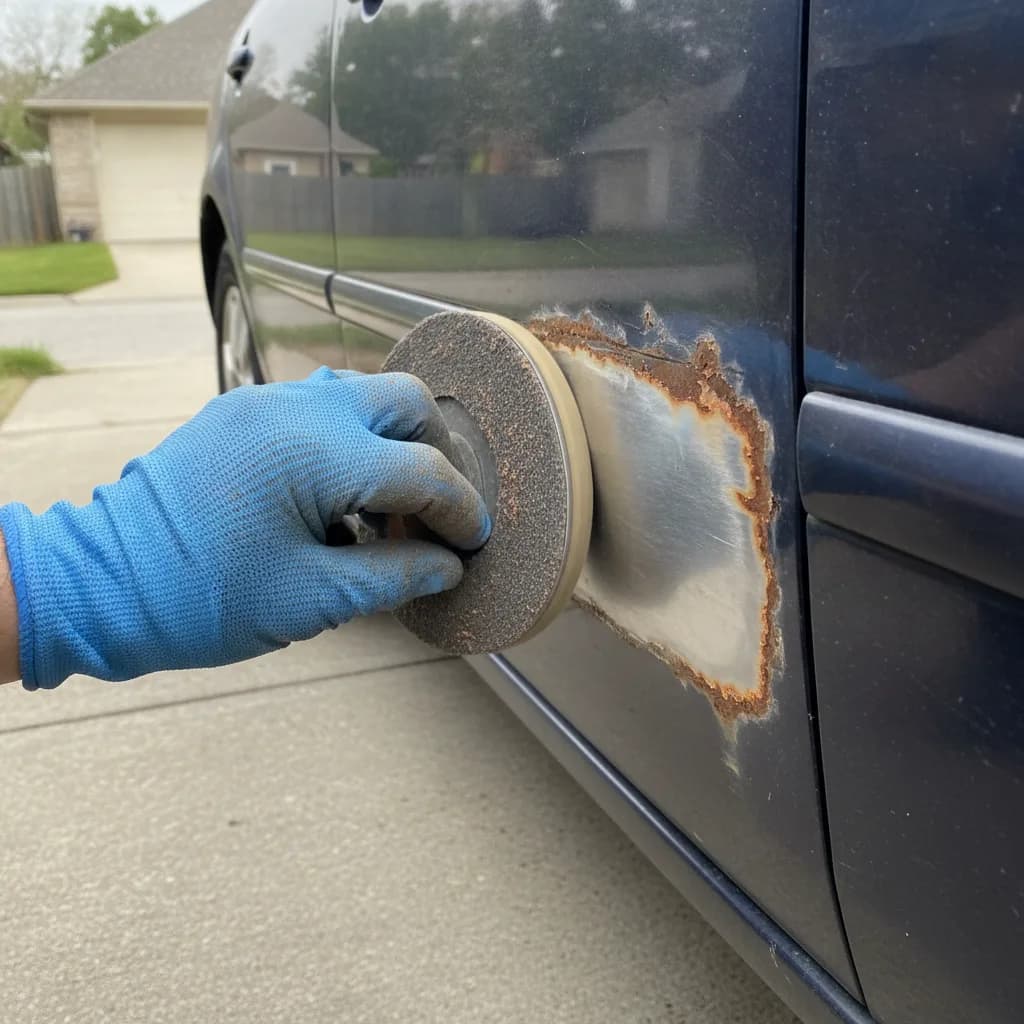
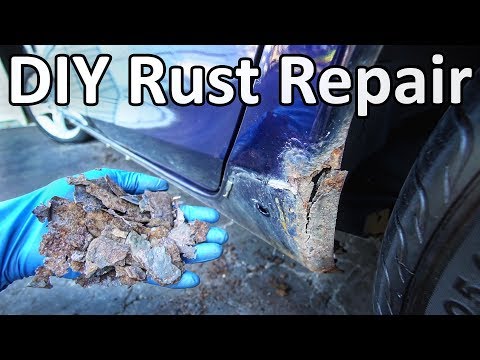
If your rust is truly surface level and sitting on a flat, easy-to-reach panel like a door skin or a hood edge, you can fix it yourself in an afternoon. Here is the honest process. First, wash and dry the area, then mask off a few inches around the rust so you only work the spot. Second, sand the rust off completely, starting coarser and working finer, until you see nothing but bright, clean metal with no orange left in any pit. This step is the whole ballgame, so do not rush it. Third, wipe it with degreaser or rubbing alcohol so no dust or oil is left. Fourth, if the metal was pitted at all, brush on a rust converter or self-etching primer to lock the surface, then prime the bare steel. Fifth, lay on your color in thin coats and let each one flash, then clear it if the panel has clear coat. Sixth, once it fully cures, seal the area with wax or sealant so water stays off the fresh edge. The catch nobody tells you: matching factory paint by eye almost never blends invisibly, especially metallics, which is why a lot of DIY rust spots end up looking like a patch even when the rust is truly gone. The video below shows the same remove-it-all-first process on a body panel. If your real problem is a scratch or chip that has not rusted yet, start with how to fix a car scratch instead.
Scale and rust-through: why these need a pro, not a rattle can
Once rust pits the metal or opens a hole, it is cut-out, patch, or panel-replacement work. A spray can over it only hides the problem for a while.
The internet is full of videos fixing rust holes with fiberglass, body filler, or a mesh patch and a spray can. Those make a rusty car look fixed for a few months, and then the rust marches right back out from behind the filler, because filler is not metal and it does not stop corrosion. A real scale-rust or rust-through repair means cutting out the bad metal, welding or bonding in fresh metal, and then doing body and paint over it. On modern cars a lot of rust also lives underneath: rocker panels, wheel arches, subframe mounts, brake and fuel lines, floor pans. That is not a cosmetic call. If the rust is on anything that holds the car together or keeps you safe, get real eyes on it before you spend a dollar on filler. Sometimes the honest answer on an older car is that fixing the rust costs more than the car is worth, and you are better off knowing that up front. I break the numbers down in what car rust repair costs in the DMV, and the shop-versus-mobile side in PDR versus a body shop.
Why painting over rust never works
Paint is not a sealer against rust. Cover active rust and it keeps eating from underneath until it bubbles back through the new finish, usually worse.
This is the single most common rust mistake I see. Someone hits a rust spot with a rattle can to make it disappear before selling the car, or just to stop looking at it. Two things happen. The rust that was there keeps going, because you sealed moisture and oxide against the steel instead of removing them. And the fresh paint has nothing clean to grip, so it lifts at the edges. Within a season you have a bigger rust bubble than you started with, now with peeling paint on top. Paint only protects clean, primed metal. If there is any rust left under it, you have not fixed anything, you have set a timer.
Why DMV cars rust (road salt is the culprit)
Winter road salt is the number one rust driver in Virginia, Maryland, and DC. It attacks the underside, rockers, and wheel arches all winter long.
If you owned cars in warmer, drier places and never dealt with rust, the DMV will teach you fast. Every winter, Virginia, Maryland, and DC crews lay down rock salt and salt brine to keep the roads clear, and that salt is brutal on steel. It clings to the underside of your car, packs into the wheel arches and rocker panels, and speeds up rust every time the slush melts. Add our humidity the rest of the year and you have a rust climate. That is why the spots I see most around here start low: the bottoms of doors, wheel arches, rockers, and around the exhaust and suspension. The fix is simple and it is prevention. Rinse the underside of your car a few times through the winter, especially after a salted storm, and deal with any chip or scratch that reaches bare metal before the salt finds it.
How to stop rust before it starts (fix chips early)
Rust almost always starts at a rock chip or scratch that reached bare metal. Sealing those early is the cheapest rust repair there is.
Almost every rust spot I fix started as something tiny: a rock chip on the hood, a door ding that cracked the paint, a scratch that went to metal. Paint is the only thing keeping air and salt off your steel, so the second that seal is broken, the clock starts. The cheapest rust repair in the world is the one you do before it is rust, by sealing a fresh chip or scratch while the metal is still clean. That is why I tell people not to sit on a cracked-paint dent or a deep scratch through the DMV winter. A quick seal now beats a body-and-paint job next spring. If you have a chip or a ding sitting exposed right now, read paint chip repair cost and door ding repair cost and get it sealed before the salt does.
How I handle rust in your DMV driveway
I catch and fix light surface rust and seal chips before they rust, mobile, at your home. Deep scale or rust-through I will tell you honestly.
Most of what I do mobile is catching rust while it is still small and cosmetic, and sealing the chips and scratches that turn into rust later. Send me a couple of clear photos of the spot and I will tell you straight which of the three levels you are looking at before I ever drive out. If it is surface rust or a chip on a panel I can work, I fix it in your driveway in Alexandria, Arlington, Fairfax, Falls Church, or McLean, with no shop visit. If it is scale rust or a hole in something structural, I will tell you that too, and I will not sell you a filler job that hides it for a few months. The honest read is free, and it usually saves you money. The same mobile-first thinking is in mobile versus shop repair.
Frequently asked questions about fixing rust on a car
Can you fix rust on a car yourself?
Yes, if it is light surface rust on a flat, reachable panel. Sand it to bright metal, treat it, prime, paint, and seal. Scale rust and rust-through holes are body-shop or panel-replacement work, not a DIY spray-can fix.
How do you stop rust from spreading on a car?
Remove all of it down to clean metal, then prime and paint to seal the steel. Rust spreads because bare metal meets air and moisture, so the only real stop is taking the rust off and sealing what is left.
Does rust come back after you fix it?
Only if you left some behind. Rust taken all the way to bright metal and sealed under primer and paint does not return. Rust that was painted over, or filled over active corrosion, always comes back.
Can you just paint over rust on a car?
No. Paint does not stop rust, it hides it while the corrosion keeps eating from underneath. Within a season it bubbles back through the new paint, usually worse than before. You have to remove the rust first.
Is surface rust on a car a big deal?
Not if you catch it early. Light surface rust on solid metal is cosmetic and easy to fix. Left alone it turns into scale and then holes, so the size of the deal is really about how long you wait.
Why do cars in the DMV rust so fast?
Winter road salt. Virginia, Maryland, and DC salt the roads all winter, and that salt clings to the underside, rockers, and wheel arches and speeds up rust. Rinsing the underside through winter slows it down a lot.
Is it worth fixing rust on an old car?
It depends where it is. Cosmetic surface rust, yes, it protects the car and its value. Structural rust-through on a high-mileage car can cost more than the car is worth, so price the repair before you commit.
The bottom line
Fixing rust on a car comes down to one honest rule: you have to remove all of it, not cover it. Light surface rust on a good panel is a real DIY afternoon if you sand to bright metal and seal it right. Scale rust and rust-through are body-and-paint or panel work, and no spray can or tub of filler changes that. Around the DMV, salt is what starts it and a broken paint seal is where it gets in, so the cheapest rust repair is sealing chips before winter finds them. When you are not sure which level you are looking at, send me a photo. I will tell you the truth before you spend anything.
Buster has been doing mobile paintless dent repair across the DMV for 20+ years. He pulls dents from the inside of the panel, no body shop, no repaint, factory finish stays. Most jobs done at your driveway in 1 to 2 hours.

