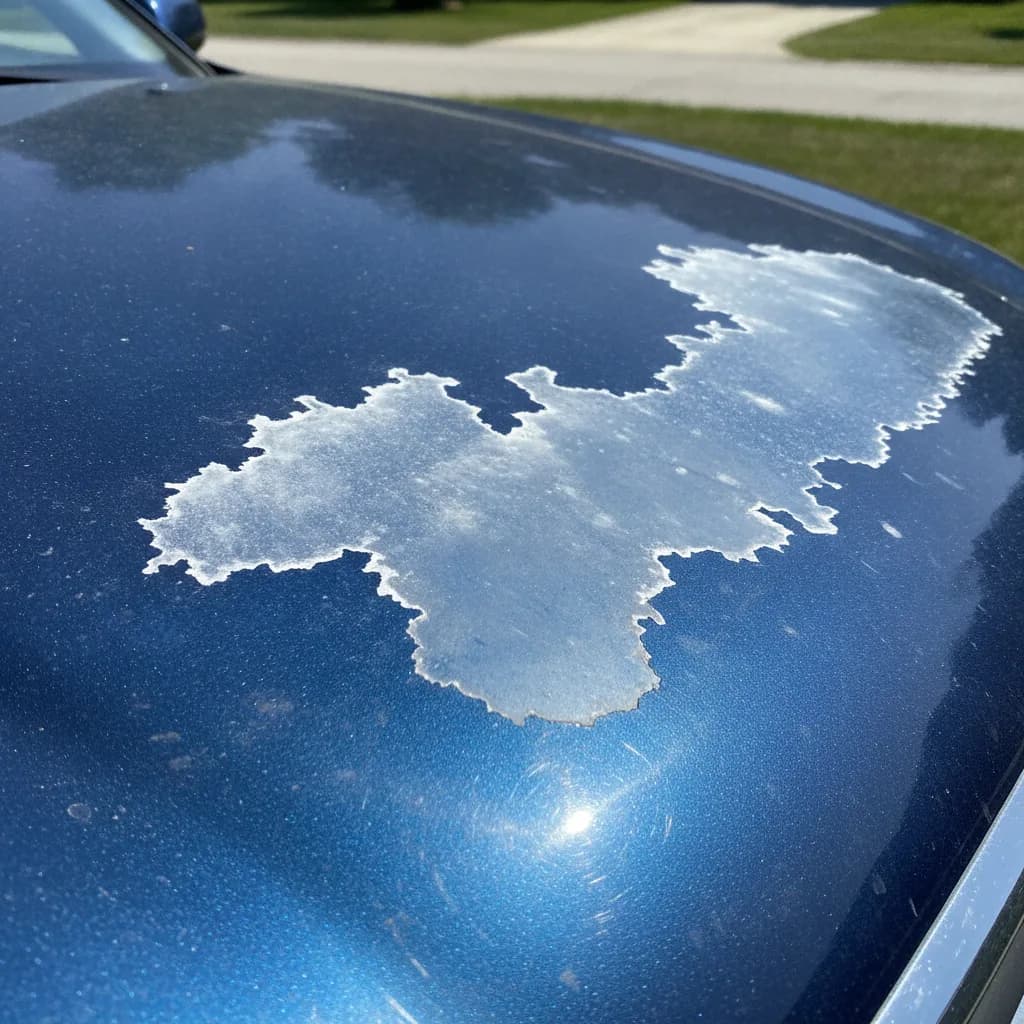

Short version: You can make peeling clear coat look better and slow it down, but you cannot truly fix it with a spray can. Clear coat peels because the top layer has lost its grip on the paint underneath, and once that starts, any clear you spray over the edge lifts again at the seam. The only lasting fix is to sand the panel down to a sound layer and repaint it, base and clear, edge to edge. A DIY stopgap buys you a season or two and hides the white patch. In the DMV, where cars bake in the sun all summer, the roof, hood, and trunk go first. After 20-plus years doing paint and body work across Alexandria, Arlington, Fairfax, Falls Church, and McLean, here is the honest read on what actually works, what only looks like it works, and what it costs.
Can you actually fix peeling clear coat yourself?
You can improve it and slow it, not truly fix it. A DIY stopgap hides the white patch and buys time. A lasting fix means sanding the panel and repainting it.
Here is the answer the product listings and the five-minute YouTube videos dance around. Peeling clear coat is not like a scratch or a chip, where you fill a spot and move on. It is a failure of the whole clear layer's bond to the paint underneath. So yes, you can wet-sand the loose flakes off, feather the edge, and lay a little fresh clear over it, and it will look a lot better for a while. But you are sealing a wound, not healing it. The clear around your patch is aging and letting go too, and within months to a year the new clear lifts at the boundary and the peeling marches on. That is not me talking you into a big job. It is just what clear coat failure is. If your problem is actually a scratch or a chip and not true peeling, those are different repairs, and I cover them in how to fix a car scratch and paint chip repair.
Why clear coat peels in the first place
Clear coat peels because sun and UV break down the top layer until it loses its grip on the color coat below. It is a bond failure, which is why it spreads.
Your car's paint is layers: primer, then the color coat, then a clear top coat that carries the gloss and the UV protection. That clear layer takes all the sun. Over years, ultraviolet light breaks down the clear and the glue-like bond holding it to the color coat, and once a corner lets go, water and more sun creep under the edge and lift it further. That is why peeling always spreads outward from a spot instead of staying put. Two things make it worse. First, some factory clear coats from the early 2010s were sprayed thin and are known to fail early, especially on white, red, and black cars. Second, sun exposure. A car kept outside in DMV summers ages its clear far faster than one in a garage. This is a wear-and-weather failure, not damage, which is exactly why a fill-the-spot approach does not hold.
Is it one spot or the whole panel? How to tell
Press and pick at the clear around the peeled area. If it stays put and stuck, a spot stopgap can work. If it lifts or you see several patches, the whole panel is failing.
Before you spend a dime or an afternoon, figure out how far gone the panel is, because it changes everything. Look across the panel in bright light from a low angle so the gloss shows every flaw. Then gently try to lift the clear at the edge of the peeled area with a fingernail. If the surrounding clear is solid and well stuck and the failure is one small isolated patch, a DIY stopgap has a real shot at buying you a year or two. If the clear lifts easily, feels brittle, or you can see several cloudy or flaking patches across the panel, the whole clear layer is failing and any spot fix will peel again fast. That second case is a repaint of the whole panel, full stop. This spot-versus-panel call is the same judgment I make on a scratch or scuff too, and the honest version of it is in PDR versus a body shop.
Why the spray-can spot fix keeps peeling
New clear cannot bond to a failing edge. It grips your fresh-sanded spot but not the aging clear beside it, so it lifts at the seam and the peeling continues.
This is the part every DIY video skips, and it is the whole reason people redo this job twice. When you spray clear over a sanded patch, the new clear only bonds well where you sanded to a clean, sound surface. The clear right next to your repair, the stuff you feathered into, is already breaking down. Your fresh clear sticks to your patch but it is sitting on top of a layer that is still letting go, so the seam between old and new becomes the next place it lifts. You have not stopped the failure, you have drawn a new line for it to follow. That is why a spray-can fix looks great for a few months and then peels at the exact edge you feathered. The video below is an honest DIY walkthrough of the spray-can method, and it is worth watching for what it shows and for what it quietly proves about how long it lasts.
The honest DIY stopgap: buy yourself a season
If you know it is temporary, you can clean up a peeling spot in an afternoon: sand the loose clear back, degrease, and lay a couple of light coats of 2K aerosol clear.
There is a right way to do the stopgap, and done right it genuinely helps an isolated patch look normal and slows the spread for a season or two. The steps are in the how-to box on this page, but the short of it: wash and degrease so nothing stops the new clear from sticking, wet-sand the loose flakes off and feather the edge with 800 to 1000 grit until you cannot feel a ridge, wipe every speck of dust off, then lay two or three light coats of a quality 2K aerosol clear, not the cheap 1K stuff that never fully hardens. Cure it a day or two and polish lightly. Do it knowing what it is: a bandage that hides the white and buys time, not a cure. Watch the edge over the next few months, and the day it starts lifting again is the day the panel is asking for a real fix. If you would rather not gamble the afternoon, send me a couple of photos first and I will tell you straight whether the stopgap is even worth trying.
What a lasting fix actually is
The durable fix is repainting the panel: sand the failed clear down to a sound layer, then respray base and clear edge to edge so there is no mid-panel seam to peel.
A real repair means treating the whole panel, not the spot, because clear coat has to go on edge to edge. Here is why you cannot just blend a little clear into the middle of a hood or door: clear coat does not fade into itself the way color can, so any spot where new clear stops in the middle of a panel leaves a visible ring, and that ring becomes a peel line. So the lasting fix is to sand the failed clear off the entire panel, down to a sound base coat or to primer if the color is damaged too, then respray fresh base coat if needed and two to three coats of clear across the whole panel, from one natural edge to the next. Done in a controlled setting with proper clear, that panel is good for years again. That is body-and-paint work, not a driveway spray-can job, and it is the difference between fixing it once and fixing it every spring. For how mobile work fits versus a full shop, see mobile versus shop repair.
What it costs to fix peeling clear coat in the DMV
Expect a rough range: a small single-panel respray runs a few hundred dollars, a full large panel more, and multi-panel jobs add up fast. A DIY stopgap is 30 to 60 dollars in materials.
Real numbers, honestly framed as ranges because every panel and color is different. A DIY stopgap costs you 30 to 60 dollars in sandpaper, degreaser, and a can or two of 2K clear, plus your afternoon, and it buys time, not a permanent fix. A professional single-panel respray in the DMV typically runs in the few-hundred-dollar range for a smaller panel and climbs for a big hood or roof, with metallic and pearl colors costing more because they are harder to match and blend. Once two or three panels are peeling, the number adds up quickly, and at some point a whole-car respray becomes the smarter spend. Insurance almost never covers this, because peeling clear coat is wear and weather, not a covered incident, which I explain in what insurance does and does not cover. The honest move is to fix the failing panels before the sun spreads it to the next one, since one panel now is far cheaper than four panels next summer. For how single-panel paint pricing works on scuffs and chips, the ranges in bumper scuff repair cost and car scratch repair cost give you the shape of it.
Why DMV cars peel, and which panels go first
Sun and summer heat drive clear coat failure, so cars parked outside in the DMV peel faster, and the flat panels that take the most sun, the roof, hood, and trunk, always go first.
If your clear coat is peeling, look at where it started, and it is almost always a horizontal panel. The roof, the hood, and the trunk lid take the sun straight on all day, so they cook the hardest and their clear fails years before the doors or fenders. That is why you see so many older cars around Alexandria and Fairfax with a perfect-looking body and a roof that has gone cloudy and white. Our summers do it: months of strong sun and heat, cars parked outside at work and at home, and no garage. There is not much you can do to reverse the sun, but you can slow it. Keep the car waxed or sealed so the clear has some UV protection, park in shade or a garage when you can, and fix a small peeling spot before it spreads rather than after. And if the roof has already gone, treat it as a panel repaint, because a stopgap on a fully sun-failed roof will not last a season. Rust from the road salt is the other DMV paint-killer, and that one I cover in how to fix rust on a car.
Frequently asked questions about peeling clear coat
Can peeling clear coat be repaired without repainting?
Not permanently. You can sand the loose clear back and spray fresh clear to hide the spot and slow it, but the surrounding clear is still failing, so it lifts again at the seam within months to a year. A lasting fix means repainting the whole panel.
How do you fix peeling clear coat at home?
Wash and degrease the area, wet-sand the loose flakes off and feather the edge with 800 to 1000 grit, wipe off all dust, then lay two or three light coats of 2K aerosol clear. Treat it as a temporary stopgap, not a permanent repair.
Why does my clear coat keep peeling after I fix it?
Because new clear cannot bond to the aging clear next to your repair. It grips your sanded spot but sits on top of a failing layer, so the seam between old and new becomes the next place it lifts. The whole panel needs repainting to stop it.
How much does it cost to fix peeling clear coat?
A DIY stopgap is about 30 to 60 dollars in materials. A professional single-panel respray in the DMV runs in the few-hundred-dollar range and up depending on panel size and color. Multi-panel jobs add up fast.
Will clear coat peeling get worse if I leave it?
Yes. Clear coat failure is a bond failure that spreads outward from the edge as sun and water creep under it. Left alone it grows across the panel and jumps to the next one, so a small spot now is cheaper than a whole side later.
Why is only my roof or hood peeling?
Those flat panels take the sun straight on all day, so their clear coat breaks down years before the doors or fenders. Horizontal panels almost always fail first, which is why so many DMV cars have a clean body and a cloudy roof.
Can you touch up clear coat in the middle of a panel?
Not cleanly. Clear coat does not blend into itself, so any spot where new clear stops mid-panel leaves a visible ring that becomes a peel line. Clear has to be sprayed edge to edge, which is why a lasting fix treats the whole panel.
The bottom line
Peeling clear coat is not damage you patch, it is a layer that has failed, and the sooner you accept that the less it costs you. A DIY spray-can stopgap is real and worth doing on an isolated spot if you know it is temporary and you keep an eye on the edge. But the only fix that lasts is sanding the panel and repainting it edge to edge, and here in the DMV the flat sun-baked panels are the ones that need it. So try the stopgap if the spot is small and stuck, keep your car waxed and out of the sun where you can, and fix a failing panel before the next summer spreads it. When you are ready for the real answer, send me a couple of clear photos of the panel and I will tell you straight whether it is a stopgap or a respray, and what it costs, before you spend anything.
Buster has been doing mobile paintless dent repair and auto body and paint work across the DMV for 20+ years. No body shop runaround, factory finish stays where it can. Most jobs done at your driveway in 1 to 2 hours.