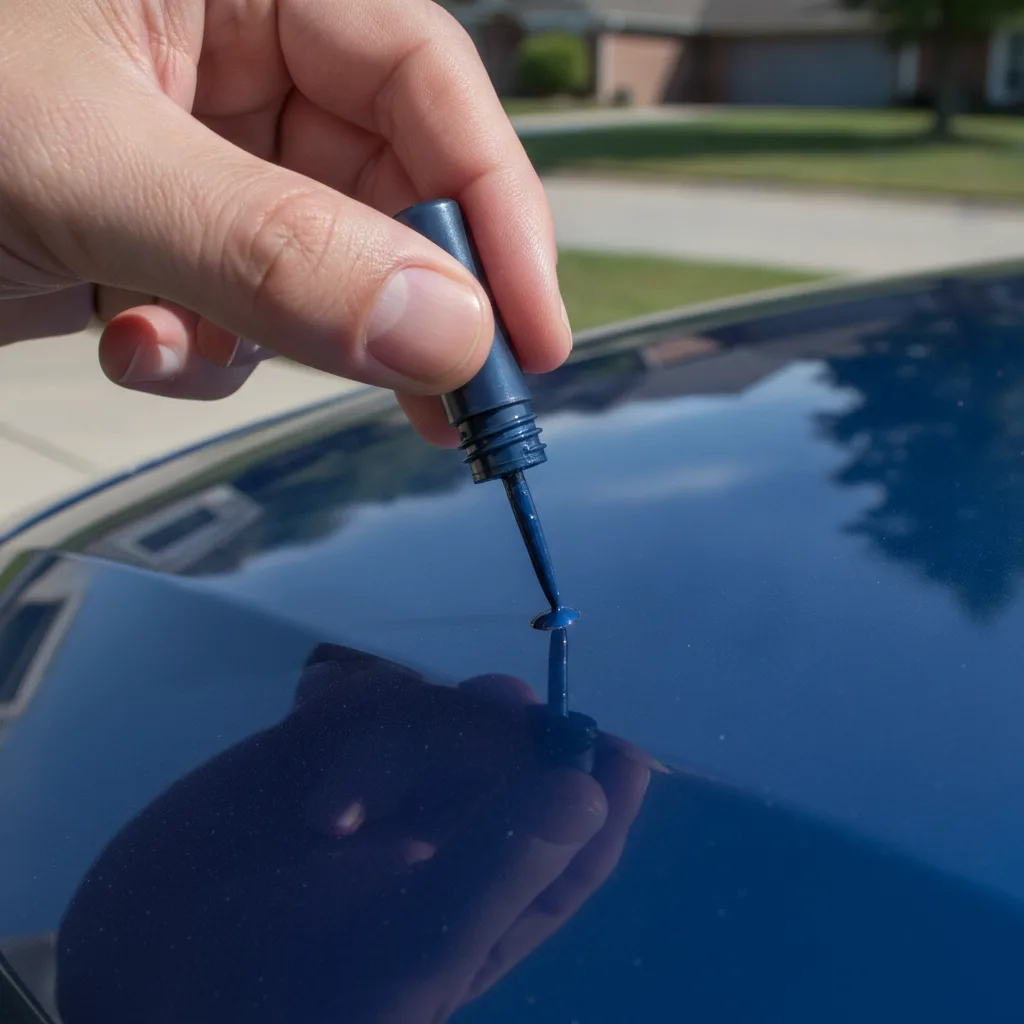

Short version: Touch-up paint is damage control, not an invisible repair. Done right, it fills a chip or nick, seals the metal so it will not rust, and hides the spot from a few feet away. It will not disappear up close, and anyone who tells you it will is selling something. The trick is matching your exact paint code, dabbing thin layers instead of brushing one thick glob, sealing bare metal with primer first, and adding clear coat over the color. For a chip or a small nick, that is a real fix. For a scratch through to primer, a scuff bigger than a quarter, or a whole cluster, touch-up paint is the wrong tool and you want a real respray. After 20-plus years doing paint and body work across Alexandria, Arlington, Fairfax, Falls Church, and McLean, here is the honest read on how to touch up car paint so it actually looks decent and lasts.
Can you actually touch up car paint yourself?
Yes, on small chips and nicks. Touch-up paint fills the spot, seals the metal, and hides it from a few feet. It will not vanish up close.
This is the part that trips everyone up, so let me set the expectation before you spend a dime. Touch-up paint is not magic and it does not erase damage. What it does, and does well, is stop a chip from spreading and rusting, and blur it enough that you stop noticing it at a walking distance. If you go in expecting the spot to disappear when you press your nose to the panel, you are going to be disappointed and probably make it worse chasing perfect. Go in expecting damage control, and a careful touch-up job is genuinely satisfying. The people posting "I tried to fix it and now it looks worse" almost always did one of two things: used the wrong shade, or globbed it on thick. Get those two right and you are most of the way there. If your damage is a scratch rather than a chip, the read is a little different, and I break that down in how to fix a car scratch.
How to find the exact paint code for your car
Your paint code is on a sticker in the driver door jamb or the glovebox. It is a short letter-number code, not the color name, and it is what makes touch-up paint match.
The single biggest reason a touch-up job stands out is the wrong color, and the fix is free. Open the driver door and look at the sticker on the door jamb, or check inside the glovebox. Somewhere on it is a paint code, usually a few letters and numbers next to something like "C/TR" or "PNT." That code, not "silver" or "dark blue," is what you order your touch-up bottle to. Two cars that look the same silver from the factory can be different codes, so the name alone is a coin flip. Buy the bottle matched to your exact code from the dealer or a code-match paint supplier, not a generic universal shade off the shelf. This matters most on metallic and pearl colors, where the paint has metal flake or a tint in it that a generic can cannot fake. Getting the code right is the difference between a spot you have to point out and one you have to hunt for.
The dab, do not brush, method that actually looks decent
Dab thin layers of paint into the chip and let each dry, never brush one thick coat. Building it up slowly is what separates a clean fix from a visible lump.
Here is the technique nobody spells out. When you brush touch-up paint across a chip like you are painting a fence, it pools, leaves brush lines, and dries as a raised smear that catches the light worse than the chip did. Instead, load a small amount on the tip of the applicator or a fine brush and dab it straight down into the chip. Then walk away for ten or fifteen minutes and let it dry. Come back and dab another thin layer. You are filling the chip from the bottom up in coats, not trying to do it in one shot. It takes three or four passes and a little patience, but the result sits flush and even instead of proud and blobby. Keep the paint inside the chip, not smeared onto the good paint around it. Slow and thin beats fast and thick every single time, and that one habit is most of the skill. The video below shows a detailer doing exactly this on stone chips and being honest about how it really behaves.
Prime bare metal or your chip will rust underneath
If a chip reaches shiny bare metal, dab touch-up primer in first. Color paint alone does not seal steel, so skipping primer lets rust creep under your repair.
Look into the chip in good light. If you see shiny bare metal at the bottom, you have to seal it before any color goes on, or you are just painting over a rust problem that has already started. A tiny dab of touch-up primer, let dry, gives the color something to grip and keeps moisture off the steel. This is not optional in the DMV, where winter road salt gets into every chip and eats bare metal fast. If the chip only goes down to gray primer or colored paint and no metal shows, you can skip straight to color. But when in doubt, prime. A chip you sealed properly stays sealed for years; a chip you painted over without primer bubbles and lifts by the next spring, and now it is a rust spot instead of a chip. Rust is its own repair once it takes hold, and I cover catching it early in how to fix rust before it spreads.
Do not skip the clear coat over your color
Modern paint is color then clear. Touch-up color alone dries flat and dull against the gloss, so a thin clear coat over it is what makes the spot blend.
Most people fill the chip with color, see that the color matches, and call it done, then wonder why the spot still shows as a dull patch. Your car's paint is two layers over the primer: the color coat, then a clear coat that carries all the shine. When you only lay color, that spot has no gloss and reads as a flat mark surrounded by shiny paint. After your color is filled and dry, dab a thin layer of touch-up clear over it. That brings the gloss up to match the rest of the panel so the repair disappears into the reflection instead of sitting dull inside it. Give the clear a day to cure before you wash or touch the area. This two-stage step is exactly what separates a body shop finish from a driveway job, and it is why clear coat is its own subject when it fails, which I get into in peeling clear coat.
Why your touch-up spot looks like a bump, and how to level it
Touch-up paint dries a hair proud of the surface. You either leave it slightly raised to seal the chip, or carefully wet-sand it flush once fully cured.
If you build a chip up properly, the fresh paint ends up sitting just a little above the surrounding surface. That is normal, and you have two honest choices. The easy, safe choice is to leave it slightly proud. It still seals the metal and hides the chip, and from any normal distance you will not see the height. The advanced choice, once the paint has cured for several days, is to wet-sand the high spot level with very fine paper on a small block, then polish it back to gloss. Done right, that makes the repair nearly vanish. Done wrong, you sand through the good clear around the chip and turn a small fix into a real repair. This is the step where beginners get into trouble, so my honest advice is to level it only if you are comfortable and patient, and otherwise leave it proud and sealed. There is no shame in a chip that is protected and 90 percent invisible.
When touch-up paint is the wrong tool
Touch-up paint is for chips and small nicks. A scratch through to primer, a scuff bigger than a quarter, or a whole cluster of damage needs a real respray.
Knowing when to stop is half the job. Touch-up paint shines on stone chips, small nicks, and tiny door-edge dings where you are filling a defined hole. It is the wrong tool the moment the damage spreads out. A long key scratch, a scrape down to primer or metal across several inches, curb rash on a bumper, or a cluster of chips all over the nose of the car are respray jobs, not dab jobs. If you try to touch-up-paint a big area, you get a patchy, mottled mess that looks worse than the damage and is harder for a pro to fix afterward. The honest test: if the damage is smaller than a pencil eraser and shaped like a hole, touch it up. If it is bigger than a quarter, long, or clustered, seal any bare metal to stop rust and then get a real paint repair. For what those bigger jobs actually cost, the ranges in car scratch repair cost and bumper scuff repair give you the shape of it, and the mobile-versus-shop tradeoff is in mobile versus shop repair.
Touch-up paint and the DMV: road salt, gravel, and rust
DMV cars chip fast from highway gravel and get eaten by winter road salt. Sealing a chip quickly is the cheapest way to stop a rust problem here.
Where you drive matters. The stretch of I-95, I-495, and I-66 through Northern Virginia throws up gravel and construction debris that stone-chips the hood and front bumper of every car that commutes it. Then winter comes and the road crews lay down salt and brine, which finds its way into every one of those little chips and starts rusting the bare metal underneath. That is the DMV one-two punch: chips in summer, rust in winter. This is exactly why touch-up paint is worth doing here even when the chip looks like nothing. A one-minute dab that seals the metal in July saves you a rust bubble by March. If you commute the highways around Alexandria and Fairfax, walk the nose of your car every few weeks in the warm months and seal any fresh chips before the salt season hits. It is the cheapest paint maintenance there is. When rust has already started, a touch-up will not stop it, and that is when I get the call.
What a professional touch-up or respray costs in the DMV
A DIY touch-up runs 15 to 40 dollars in materials. A pro chip touch-up or a single-panel respray in the DMV ranges from around a hundred to a few hundred dollars.
Real numbers, framed as ranges because color and panel size change everything. A DIY kit, the code-matched bottle plus primer and clear, runs you 15 to 40 dollars and an afternoon, and for a handful of chips that is money well spent. If you would rather have it done clean, a professional touch-up on a few chips is a modest call-out, and a proper single-panel respray to erase a scratch or a scuffed area runs from roughly one hundred dollars into the few-hundred range depending on the panel, the color, and whether it is metallic or pearl. Insurance almost never comes into play for chips and small scratches because the repair is under your deductible, which I explain in what insurance covers. The honest guidance: DIY the small stuff to stop rust, and call a pro when the damage is bigger than touch-up paint can honestly handle. If you are weighing paintless dent work against body-and-paint at the same time, PDR versus a body shop lays out which damage goes which way.
Frequently asked questions about touching up car paint
Does touch-up paint actually work?
Yes, for chips and small nicks. It fills the spot, seals the metal against rust, and hides the damage from a few feet away. It will not make the spot invisible up close, so treat it as damage control, not a flawless repair.
How do I find the right touch-up paint for my car?
Look for the paint code on the sticker in the driver door jamb or the glovebox. It is a short letter-and-number code, not the color name. Order or buy a touch-up bottle matched to that exact code, especially for metallic and pearl colors.
Why does my touch-up paint look worse than the chip?
Almost always because it was brushed on thick or the shade was wrong. Dab thin layers instead of brushing, let each dry, and use a code-matched color. One thick glob dries raised and catches light worse than the original chip.
Do I need clear coat over touch-up paint?
On modern cars, yes. Paint is color then clear, and touch-up color alone dries dull and flat against the surrounding gloss. A thin clear coat over the dried color brings the shine up to match so the spot blends in.
Will touch-up paint stop a chip from rusting?
Only if you seal bare metal with primer first. Color paint alone does not protect steel. Prime any chip that reaches shiny metal, then color and clear over it. In the DMV, sealing chips fast is what keeps winter road salt from rusting them.
How long does touch-up paint take to dry?
Give each thin coat about ten to fifteen minutes before the next, and let the final clear coat cure for a full day before washing or polishing. Rushing between coats is how you get a soft, smeared finish that never levels out.
When should I skip touch-up paint and call a pro?
When the damage is bigger than a quarter, a long scratch through to primer or metal, curb rash on a bumper, or a cluster of chips. Those are respray jobs. Seal any bare metal to stop rust, then get a real paint repair rather than fighting it with a bottle.
Buster has been doing mobile paintless dent repair and auto body and paint work across the DMV for 20+ years. No body shop runaround, factory finish stays where it can. Most jobs done at your driveway in 1 to 2 hours.